
Our Hands in the Same Work
A reflection on collaboration, paper flowers, and building something together
From Digital Trap to Paper Flowers
Working a traditional 9–5, tethered to dual screens, managing a team of overseas designers producing predetermined graphics under 100-page brand guidelines does not exactly cultivate vibrant, free-flowing creativity.
After ten years in B2B marketing, I began to recognize how easily a designer’s mind can become trapped in a digital space.
For three very work-heavy years, I juggled my corporate role alongside building Our Family Designs, trying to give both full-time attention. When I finally left the corporate world, I transitioned fully into running my own business. My process became familiar: design on the computer, move the file into machine software, manufacture the physical product, then step into the role of selling it myself.
The shift from digital service work into manufacturing and direct sales is significant. It requires a different mindset and a different type of stamina. There is probably a separate conversation to be had about navigating that transition more smoothly, but that is for another day.
What I had not fully explored yet was reversing my process entirely.
Inviting Dom Into the Creative Process
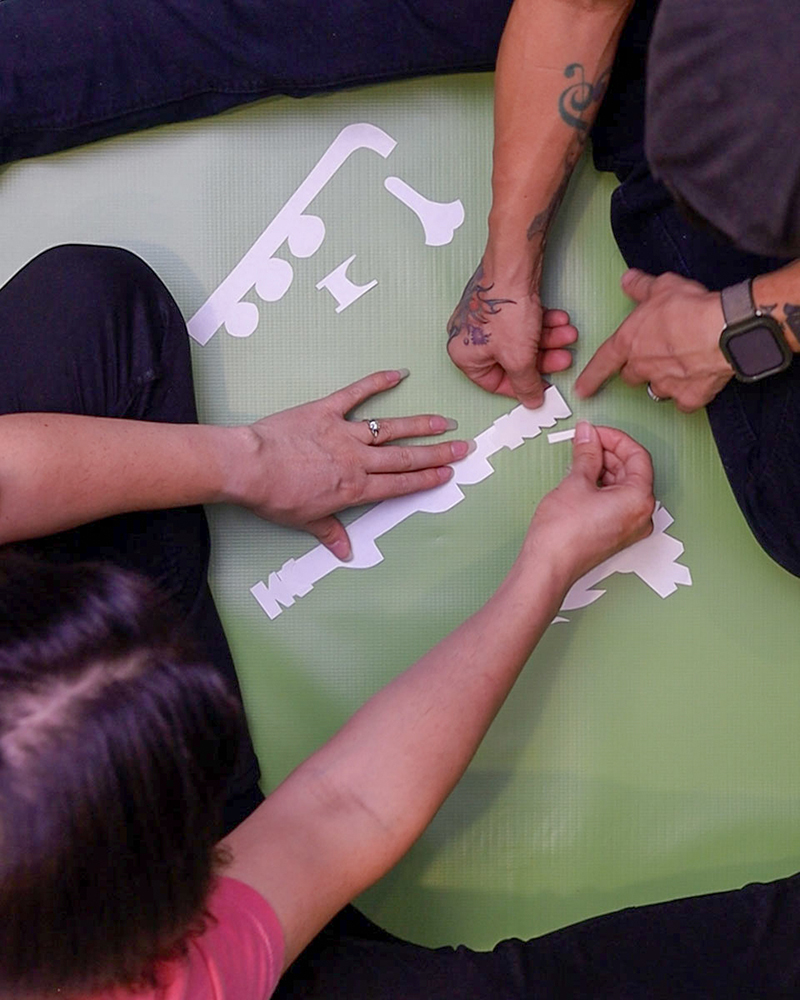
My partner, Dom, has been beside me through every stage of building this company. That in itself is special. Most of his contribution has traditionally come through suggestions, support, and physical labor. For someone who did not necessarily set out to start a small business, that level of support is extraordinary.
On December 21, 2025, I asked him to try something new. I invited him to sit down and participate in the design process itself. We had never considered that before. Seeing the date in my photos later reminded me how long it took to attempt this shift after starting the company.
This project became pivotal. It gave Dom a way to connect directly to the creative work he helps produce and sell. It also sparked something in me. That exploratory mindset influenced my 2026 direction and pushed me toward more physical-first media.
Instead of beginning digitally and translating into physical form, we started with paper and planned to bring it into the computer afterward. Artists do this all the time, but for us, it felt entirely new.
The result was something neither of us expected.
Beginning With Paper
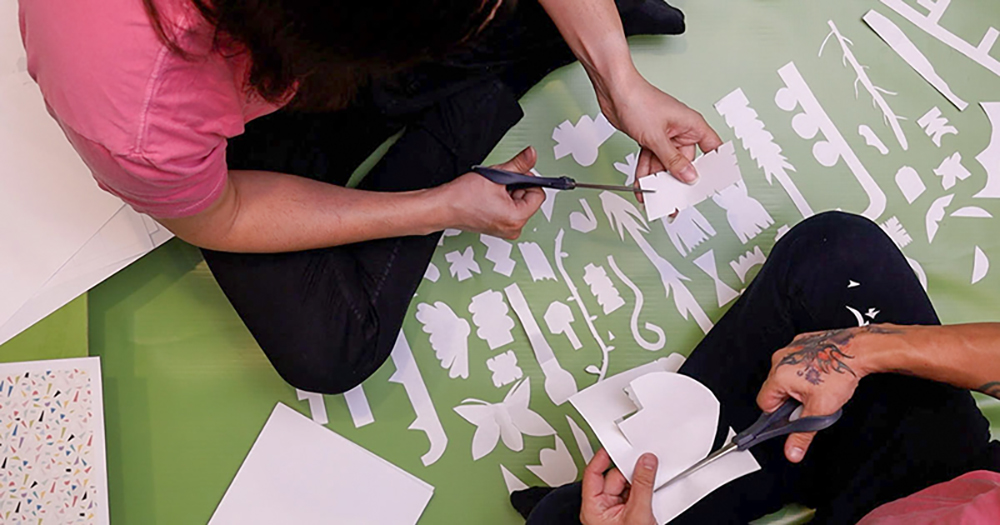
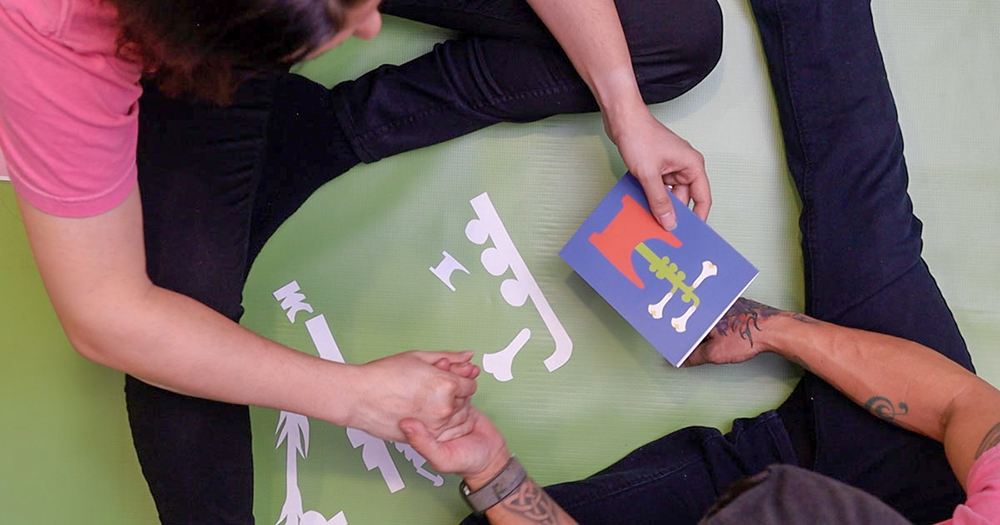
We started simply. One-to-one ratio squares cut by hand with the goal of shaping them into flowers. The guidelines were minimal. Keep the edges sharp and flat. Add notches where it feels right. Around five notches created a beautiful five-petal bloom.
After building a small collection of flower tops, we added stems, leaves, and vases. As the couch slowly filled with shapes, I saved my favorite off-cuts so we could later photograph and digitally capture their silhouettes. That would allow us to move into vectorization, the part of the process that feels most natural to me.
What surprised me was not the method. It was the feeling.
The growing spread of paper pieces across the couch created a childlike creative joy I rarely experience with him.
At first, he asked for direction. What should I cut next?
Where should this piece go? By the end of the first sheet of paper, that hesitation disappeared. He asked for more paper instead.
By the time we finished cutting, we had over 90 unique shapes. The couch, coffee table, and floor looked like a paper shredder had exploded. For once, I cleaned everything up immediately. That is not typical for me.
In my own creative process, I often chase the finished product more than I appreciate the middle. One completed piece feels like success. Ten unfinished ideas feel like quiet failure stacking up. This project interrupted that mindset. Within twenty-four hours, we turned scrap paper into something cohesive and ready for print. It felt like momentum instead of pressure.
From Scrap to Digital
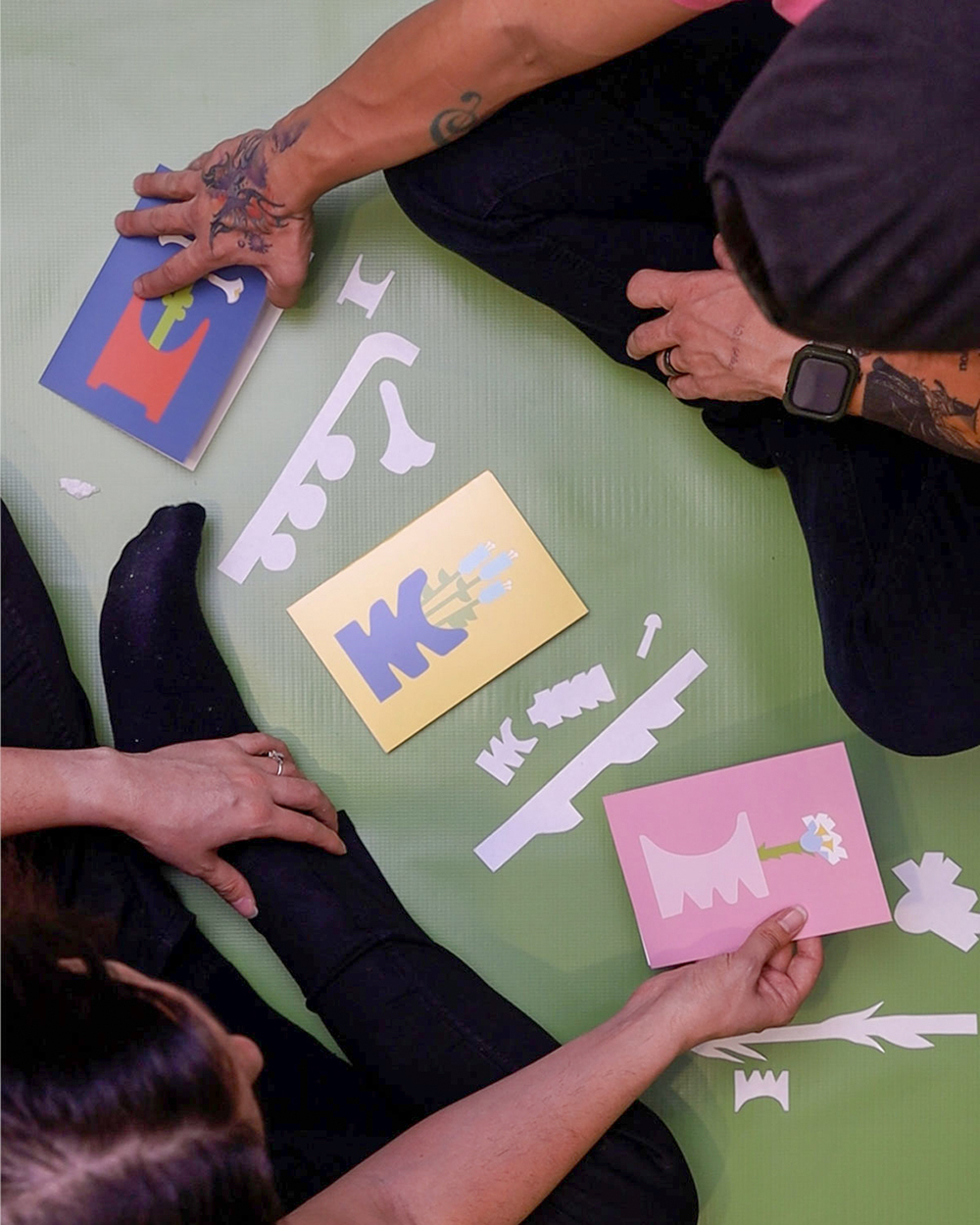
I photographed the entire collection on an IKEA magnetic chalkboard. The contrast between the white scrap paper, left over from dye-sublimated tote production, and the black background made digital tracing straightforward.
Using Photoshop and Illustrator’s Image Trace, I created 92 vector shapes. After assembling two test flowers, I invited Dom to sit at my desk again. This time, he directed the compositions. He selected which shapes became buds, stems, and pots. We focused on silhouettes first and left color for later.
At the same time, our business was in production on CNC-milled pine flowers carved and hand-painted in a preset palette. I pulled that same color profile into these illustrations and asked him to help choose combinations. That is when the project shifted.
It stopped feeling like an experiment and started feeling cohesive.
It connected naturally to our existing work while still carrying its own identity. It met the professional standard I always aim for, but with more emotional weight behind it.
It Truly Takes a Village
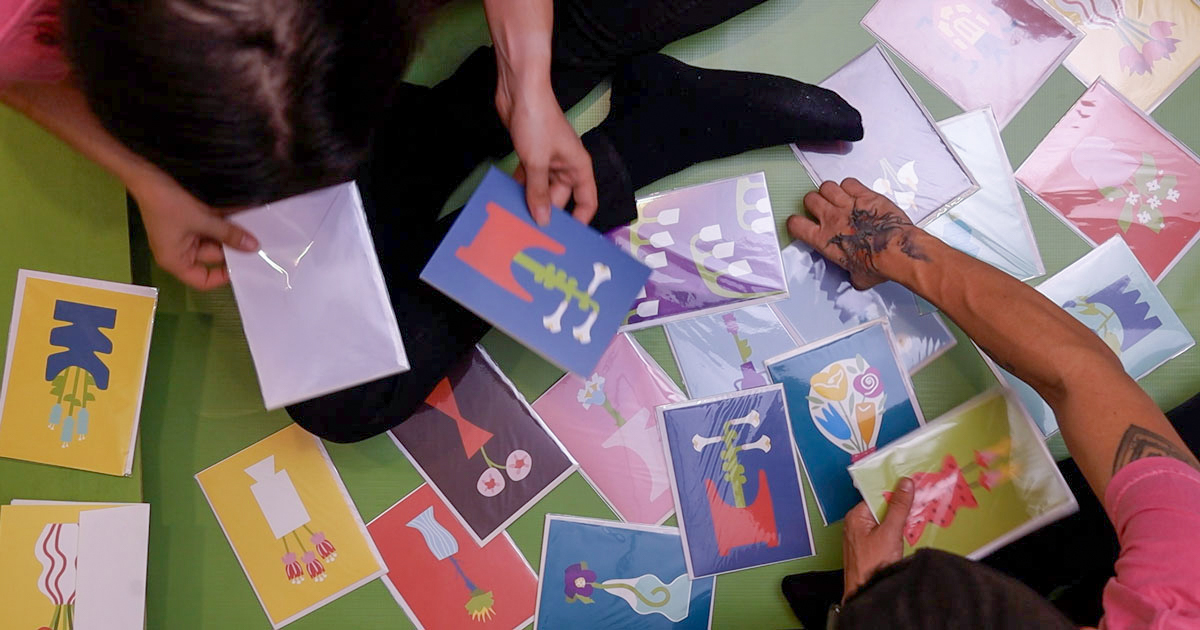
When it came time to package everything, my family happened to be visiting. Eight extra hands folded cards, stuffed envelopes, and sealed bags. Production multiplies quickly once quantity enters the picture.
A practical tip from the process: use blue painter’s tape to collect the static cling strips from cellophane packaging. It saves an incredible amount of frustration.
What This Changed
The show we originally intended these for has already passed, but the cards continue to live in our inventory.
They are part of the collection now.
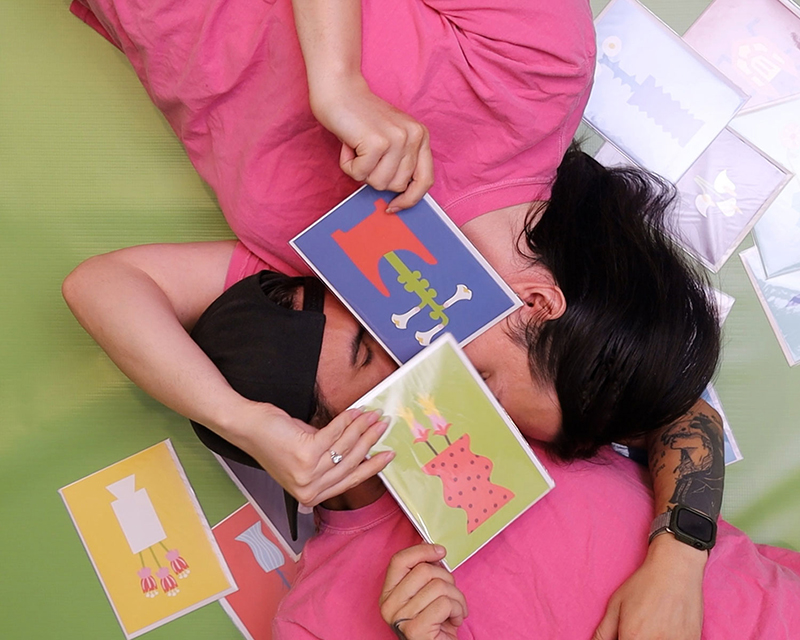
More importantly, they are part of us.
This project shifted something in our dynamic. Dom moved from being the producer of my work to a co-creator of our work. That distinction matters deeply. It changed how I see collaboration, and it changed how he connects to what we build.
We will absolutely create this way again.
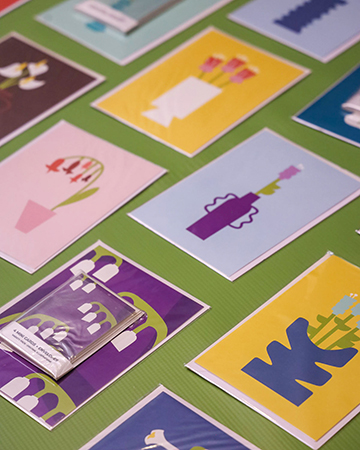
If you would like one of the cards, they are available on our website. If you want to try something similar, I have included a printable workbook with the March creative challenge, so you can cut, collage, and build your own flowers.
Make something that feels like you. Invite someone you love into the process, even if it is unfamiliar territory for them. Find a method that lets them participate fully.
Nothing compares to watching someone you love try something new and feel joy in it.
Maybe peanut M&Ms come close.
But honestly, why not both?