Meet Featured Artist: Casey Blake
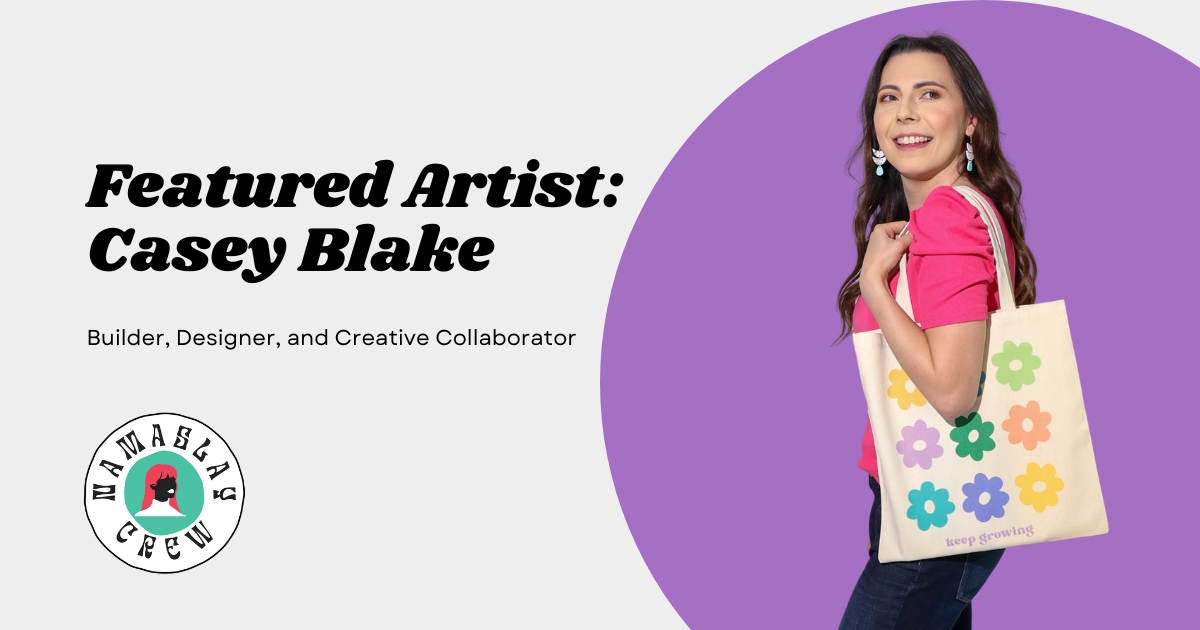
Meet Featured Artist: Casey Blake
Casey isn’t just a featured artist this month.
She’s my niece.
Which means I’ve known her long before brand launches and product collections. I’ve watched her grow up. I’ve watched her experiment. I’ve watched her build amazing things out of nothing.
And now? She’s not just working as a creative. She’s a full-on founder.
Over the years, we’ve worked together in different capacities, bouncing ideas back and forth, building projects, talking shop about design and production like the nerds we are. So, with our 2026 creative challenge fully underway, bringing her into the NamaSlay space right now feels natural.
When we started talking about collaboration, it wasn’t about “doing something for March.” It was about creating something that reflects who she is right now. A builder. A designer. A photographer. An entrepreneur… A creative who isn’t afraid to get her hands messy.
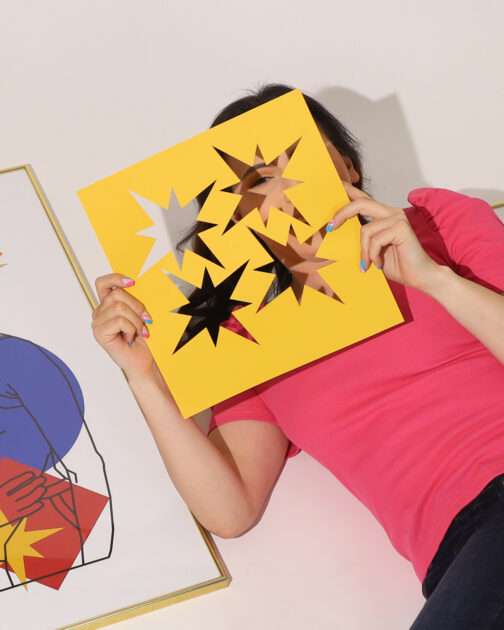
And honestly, watching that evolution has been one of my favorite things.
This month, we’re focusing on the theme of: Awakening.
Blooming in your own timing. Letting something new take shape.
There couldn’t be a more fitting person to kick off this next chapter with. Check out her interview below, and don’t miss her March Creative Challenge.
In Conversation with Casey Blake
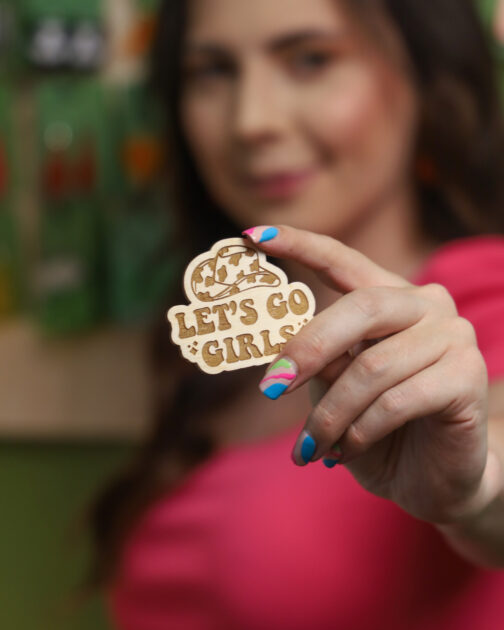
I asked Casey to share more about her journey from digital designer to founder, what collaboration has taught her, and what awakening looks like in this season of her life.
The Builder
You’ve built both The Casey Blake and Our Family Designs. What inspired you to step fully into entrepreneurship?
Working in a creative day job sparked a lot of conversations with friends and family about their own personal projects (paid or unpaid). After a few years of that, my mom started talking seriously about launching her own LLC to manufacture craft-based work (scrapbooking, vinyl cutting, print-and-cut style projects). We went through three completely different brand kickoffs together. New logos. New messaging. Design guidelines. The whole thing.
But she never got past setting up the social accounts, and the company just sat there unused. After about three years of watching it stall (and honestly feeling a little sad that nothing had come of it), I thought maybe I should just give it a go myself.
So I like to say I started Our Family Designs for my mom. The real goal was to get myself paid first, then build something profitable enough to support her so she doesn’t have to work three-plus jobs at once.
She’s an incredible helper and supporter (not just in my world, but in a lot of people’s worlds). She volunteers. She works with the elderly on weekends. She supports family members who require daily medical care. She has a lot of cards to shuffle and a lot of responsibilities to carry.
Knowing that made building something profitable feel necessary, not just creative. And honestly, over 60% of the products we make align directly with her skill set. So why wouldn’t I build something that allows me to utilize my creative, supportive mother?
I’m really proud to say we’re just over the cusp of being able to fully support myself through the business. And we’re hoping this year of growth is the one that allows us to officially employ her.
That’s always been the dream.
When did you realize you weren’t just a designer, you were a builder?
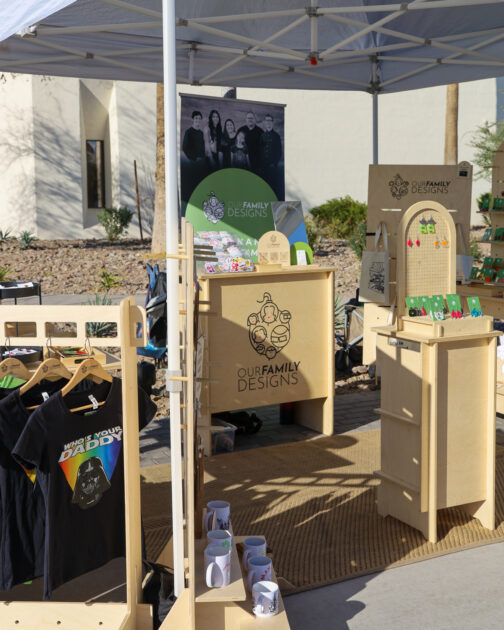
I think the day I made my first item with the CNC was the moment I realized how crazy things were about to get.
I wasn’t just a designer anymore. I was a furniture manufacturer. And I could do it all by myself.
That shift felt powerful. Designing something is one thing. Building it, finishing it, sanding it, shipping it. That hits different.
After spending years in B2B marketing, what shifted internally when you moved from corporate structure to building something of your own?
Corporate structure is strict. Brand guidelines aren’t something you casually reconsider, and the overall tone is usually scripted and educational (often written by a professional copywriter whose voice stays consistent across everything). It’s polished. It’s controlled. It’s strategic.
That tone never moved easily into my own world.
When I started my own company, I was suddenly the client. There were no review meetings. No approvals. No external guardrails. And honestly, I didn’t really know what to do with that level of freedom.
I learned very quickly that I’m not great at building something with zero restrictions. Total freedom actually stalled me. So I had to start creating my own structure. I set brand boundaries. I defined visual rules. I called a few design friends and asked for honest feedback.
That process slowly shaped what you’re seeing today.
I also learned I can have fun. I don’t have to use only one font forever. I don’t have to sound like a handbook. I’m manufacturing products meant to appeal to all ages and demographics, so the brand can breathe a little.
The freedom of working for myself is remarkable. I look forward to never going back to a structured day job (especially one involving management).
What’s something you had to unlearn in order to grow?
Perfection.
The biggest thing holding you back is trying to make something perfect. Ninety percent can be good enough. Don’t let that last ten percent stop you from actually achieving something.
Perfection is often just fear dressed up as standards. Letting that go has allowed me to move faster, experiment more, and ship things that would have otherwise lived on my hard drive forever.
You talk about reversing your creative process and starting with paper instead of pixels. What did that unlock for you?
Growing up, my father was an incredibly talented artist, especially with pen to paper. Being raised around work that felt that high-level made me step away from it for a long time. Digitally, I felt safe. I loved the layers. The zoom. The structure. If I didn’t like a line, I could just hit Command + Z and try again.
Ink isn’t that forgiving (especially on a white page).
I’ve tried physical media before, but never as consistently as I wanted. So this year is dedicated to getting to a place where I’m not scared of the blank page. I want to create with my hands and the tools in front of me, and make something I genuinely enjoy. Something I believe in enough to take into the world and assign value to. Enough to sell.
And to be honest, that’s already happening.
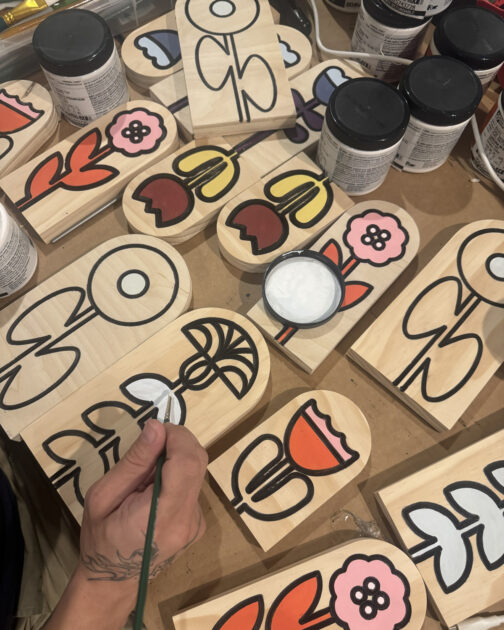
After just 20 days of painting in January, I brought my work to market and it sold (I could cry happy tears). That moment shifted something in me.
The short answer is this: starting with paper unlocked freedom. I’m finally kicking the fear of not being good enough. I’m introducing a more freeform, go-with-the-flow energy into my work after years of corporate B2B structure.
And it feels really good.
Process + Creativity
What does your creative process look like right now? Has it changed in the last year?
The process is a mess, but I like it that way.
I set loose deadlines and try to stay flexible with myself, especially because we take on custom work that doesn’t always respect my personal timelines. I do keep an eye on where the money is coming in, though. If that means my spring collection launches a week later than my ideal eight-week production timeline, so be it.
I’ve also adjusted my invoicing structure, and production now has a few willing helping hands assisting in ways that free me up to design and build more. That shift alone has changed a lot.
Last year, my process was very reactive. What did I make? What sold? Make it again.
This year feels different. It’s more intentional. What do I want to make? Let’s go make that. Then, when we have a moment to review, we can look at what sold and make informed decisions from there.
I’m trusting my core more this year, especially with the 12 mediums in 12 months approach (which I’ll definitely be talking more about with you all later in the year). It feels less like chasing numbers and more like building something aligned.
And strangely, that alignment is what’s creating momentum.
What role does play have in your creative process?
Because so much of my work is rooted in designing for manufacturing, play shows up in trial and error.
We play with scale. We play with color. We test proportions. We sample materials.
Play doesn’t always look like finger painting for me. Sometimes it looks like running five slightly different versions of the same file just to see what feels best.
That experimentation is where the magic usually happens.
What draws you to tactile, physical media in a world that is so digitally driven?
When I’m out at markets, the businesses I admire most are the “built with my hands” ones. Ceramics. Leather work. Painting on scraps. Scroll saw artists. Watercolor. Alcohol markers. You name it.
There’s something about watching someone turn raw materials into something tangible that feels grounding and honest.
As a graphic designer, I spent years living in shapes, grids, and stock photos. It was efficient. It was polished. But it wasn’t always personal.
What brings me the most joy now is when something digital still carries my fingerprints. The font is my handwriting. The photo was taken in my studio. The texture came from something I physically made first.
I want more of that.
I want to fold the textiles of my own hands into the creative work I produce. I don’t want the work to feel detached from me. I want it to feel built.
What does “messy” mean to you as a creative?
Getting messy means trying something, scrapping it, and trying again.
It’s iteration.
It’s continuing to refine and adjust until you’re closer to what you envisioned. Mess isn’t chaos. It’s progress in motion.
How do you balance artistry with the realities of manufacturing and selling product?
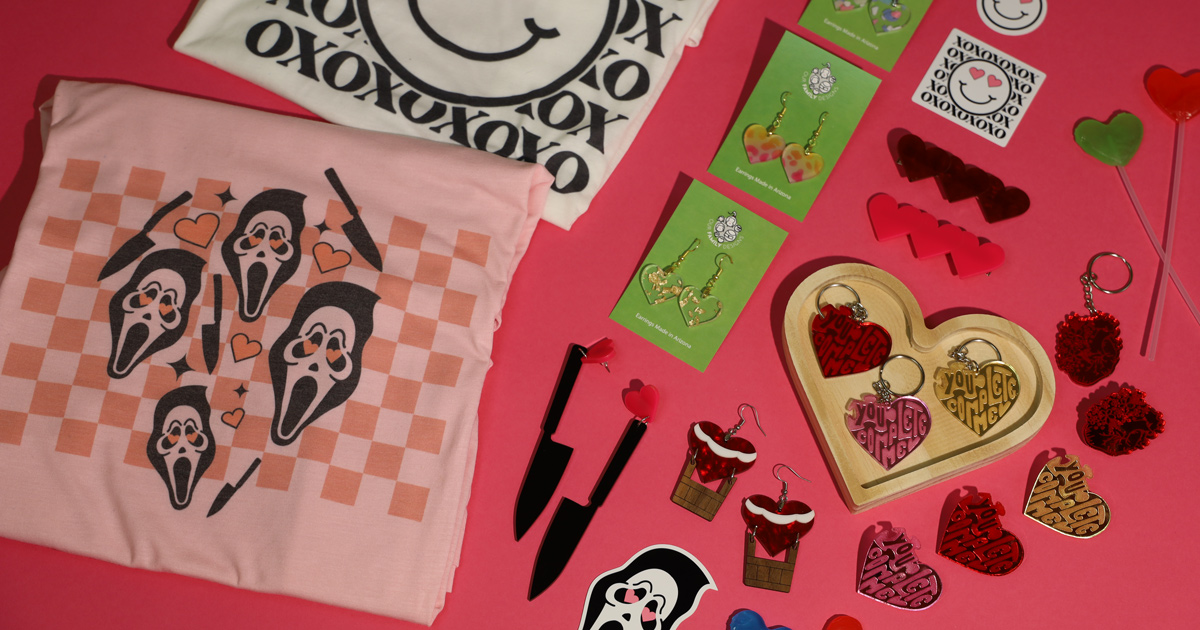
Until this year, I designed almost entirely based on what would sell (and to be fair, I still do that a lot). The balance is kind of impossible. In a perfect world, there wouldn’t be one. I would just be the artist, and someone else would handle manufacturing and sales.
But to be blunt, no one can sell my creative work with the same energy I pour into it. People want to meet the artist. They want to hear the story. They want to understand why something was made.
I’ve tested it. If I send my partner or even someone trained in sales, the show doesn’t turn the same profit. Not because they aren’t capable, but because the connection shifts.
I think a lot of small business owners would say the same. When you are the brand, the energy matters.
So the balance isn’t really about separating artistry and sales. It’s about accepting that, at least for now, they’re intertwined. I create it. I build it. I sell it. And somehow, that’s part of the art too.
How do you know when an idea is ready to become a product?
If it’s a vector file ready to be cut, we sample run it, and iterate.
At the core, it comes down to feel. Does it feel right?
If it doesn’t, we work on it more. If the energy feels wrong or forced, I’ll archive the file. I have a lot of archived “bad ideas.”
But here’s the thing: I’ve learned more every year. Ideas that weren’t achievable before suddenly become possible. Some of those archived concepts have turned into best sellers years later.
It’s about timing. The right idea at the right stage of growth.
Collaboration + Family
What has it been like collaborating creatively within family?
This part of the process has actually been lacking a little lately. We used to host monthly meetings where we’d fold in ideas that made sense for the target audience and the seasonal production timeline. I’m really just one person, so having ideas come in from multiple states and half a dozen different perspectives helped me not feel stagnant or alone in the creative production side of the business.
It reminded me that this isn’t just my brain trying to carry everything.
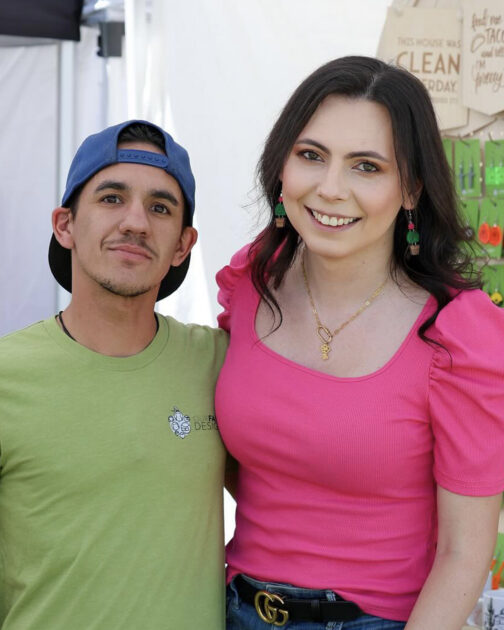
My mom helps where she can, which usually means laser cutting signs and magnets, or jumping in on the occasional stickers and vinyl projects. Those tasks align really well with her skill set, and having her involved in that way feels natural.
With my partner, Dom, the process has been trickier. Balancing our relationship and our communication styles while working together became a little too much for us, and he stepped back about two years ago. Now his role is sanding and staining projects, and working markets with me on weekends. That rhythm has been the perfect amount of overlap. Those tasks are routine at this point, so we can work side by side without it putting strain on us.
Collaboration within family is beautiful, but it requires boundaries. I’m still learning that.
How has building alongside people you love shifted your perspective on business?
Luckily, the end vision is mine alone. So even with people close to me involved, it hasn’t felt like a tug-of-war. That part has actually been really good. It hasn’t created stress for my parents or siblings in any major way.
Where I do feel it is in the time it demands. It’s a stressor on my own body, and my partner’s evenings are probably not the relaxed, worry-free vibe he would prefer most nights.
My perspective on business still isn’t very structured, but I think that’s because I’ve never done this before. At my last job, I was one step in a very long lineup of people. Now I joke that I don’t have a job and I don’t work, even though I work all the time.
Small business owners wear literally every hat in the early years. Every single hat. Even the ones you don’t like or don’t understand.
Building alongside people I love has made that reality more visible. It’s not just “my business.” It affects our shared time, our energy, our space. That’s made me more aware of pacing and boundaries, even if I’m still figuring those out in real time.
What have you learned about leadership and partnership through this process?
My perspective on leadership has shifted a lot. From the outside, people see me as a maker. Because of the tools and manufacturing equipment I use, they’re often impressed (and a little confused) that these products are being made in-house, literally in my home studio. That reaction has helped me understand that leadership doesn’t always look like managing people. Sometimes it looks like building something tangible and standing confidently behind it.
Partnerships with other brands are actually my favorite part of leadership. I love supporting another small business’s vision and then getting to see that collaboration exist in the tangible world. There’s something powerful about building something together and watching it live beyond the initial idea.
On a practical level, I’ve learned that delegation requires clarity. I do delegate, but I’ve realized I have to be very specific about what tasks are needed. And sometimes I need to remind the people helping me more than once. When expectations are clear, it results in a really strong working relationship. But that clarity has to come first, especially when someone new steps into the equation.
Leadership, for me, has been less about authority and more about communication.
Awakening
Our theme this month is Awakening. What does that word mean to you right now?
I’ve realized I’ve become stagnant, and I really desire to grow my perspective across the board.
I’ve always been big on learning. Every year I set big goals for growth. But the last two years, I haven’t been able to apply the time and energy I wanted to those goals, and to me that felt like failure.
This year feels different.
I’m finally giving myself space for those bigger goals. I’ve put minimal guidelines in place instead of an overwhelming structure, and that shift alone has made me feel motivated and inspired again.
Awakening, for me, is choosing growth on purpose. It’s recognizing when I’ve plateaued and deciding not to stay there. It’s creating space instead of waiting for it to magically appear.
And honestly, it feels really good to feel inspired again.
What are you letting go of this season?
This season, I’m choosing to protect my time.
I want more space to trial and error. More room to explore without immediate pressure to monetize. That means saying no to projects that drain me and yes to the ones that build me up.
I’m also focused on strengthening existing relationships, especially within my business, in ways that feel supportive and energizing instead of transactional.
Growth doesn’t always mean adding more. Sometimes it means subtracting wisely.
Where do you feel yourself blooming?
Right now, I feel myself blooming into more traditional media.
With my background in tech tools and digital systems, I know there will be a point where it all melts together into something uniquely mine. The physical and the digital won’t feel separate. They’ll support each other.
I think that intersection is where my real visual voice lives.
My skill set is layered in a way that not many creatives get to experience — manufacturing tools, digital design, photography, physical media. When those worlds fully merge, I believe it will result in a style and approach that feels distinct and unmistakably my own.
I can feel that forming now.
What advice would you give to someone who feels creatively stuck but knows something is trying to emerge?
I find it helpful to figure out which part of the process is actually making you feel stuck.
Is it ideation? If you can’t come up with what to paint, look for a simple solution. If you need to make something with less thinking involved, pull out a coloring book. Pick a page. Start creating.
Is it fear of messing up? Then make a mess on purpose.
If it feels scary to start on an expensive canvas, draw mini versions on scrap paper until you love the idea. Then transfer your final draft. Most art is created in stages, and that prep stage is really important to me. I even use a projector sometimes to ease that fear of messing up.
If you can identify the exact thing that’s making you stuck, chances are there’s a very simple action that can move you forward.
Creative blocks usually aren’t about talent. They’re about friction.
And friction can be reduced.
I’d love to share more about how to make art while you’re in a creative funk, because I think more people are there than they realize.
Joining the NamaSlay Crew
You’re leading our March Creative Challenge, Bloom in Paper. What are you most excited to share with the Crew this season?
The post I wrote about my partner and me making paper flowers is honestly the most excited I’ve been to write in years. There was something about that moment that felt simple and pure. We were just making. No pressure. No expectation. Just creating together.
That’s the energy I want to bring into Bloom in Paper, my first NamaSlay creative challenge.
I want people to walk away understanding that making isn’t reserved for one kind of artist. It’s not just for the people with formal training or expensive supplies. We all have a creative voice.
This month’s project is intentionally designed to be accessible. You can participate at any age and at any skill level. It can be simple. It can be detailed. It can be messy. It can be precise.
The point isn’t perfection. The point is participation.
And I’m really excited to see what everyone creates.
Visibility, Identity, and Creative Power
March 31 is International Transgender Day of Visibility. As a trans woman and a founder, what does visibility mean to you right now?
Visibility isn’t a one-day-a-year thing for me.
I stay visible 24/7 through the work I’ve built on CaseyBlake.com and through the way I show up in my business. The way I share who I am and where I stand has always been rooted in normalization.
I don’t approach visibility as something performative. I approach it as something lived.
If you want to know how to treat a trans person, think about how you would treat any other person and start there. Mutual respect is the foundation of any healthy relationship, especially with someone whose lived experience may be different from your own.
For me, visibility is about consistency. It’s about building real work, showing up in real spaces, and existing without shrinking.
And that’s something I practice every day, not just on March 31.
Has visibility ever felt complicated or heavy for you?
Yes.
I constantly think about how I’m perceived. In the last two years, especially, that weight has felt heavier.
Being visibly trans in public means there’s always an awareness. Sometimes I feel pressure to present a certain way, to perform femininity at a level that feels exhausting just to run to the store.
Lately, I’ve been relaxing that. Less pressure to have hair and makeup perfect every second of the public day. That shift alone has been a breath of fresh air.
What does it mean to build something publicly as a trans woman?
It means everything.
I guest speak regularly in design classes at MCC, and I’ve lectured in front of high school students. If even one student walks away understanding that being queer doesn’t eliminate the possibility of having a professional and fruitful future, then I did something meaningful.
I want people to see me and feel empowered, regardless of gender identity or expression.
Representation isn’t abstract when you’re standing in front of someone.
How has your identity shaped the way you approach creativity and business?
I try to stay actively involved in my community. I show up to events that are intentionally making space for LGBTQIA+ members, and I support the organizations doing that work. Being present matters to me.
The audience I create for includes queer individuals in a very real way, and that naturally reflects in the products I design. It’s not something I force. It’s just honest.
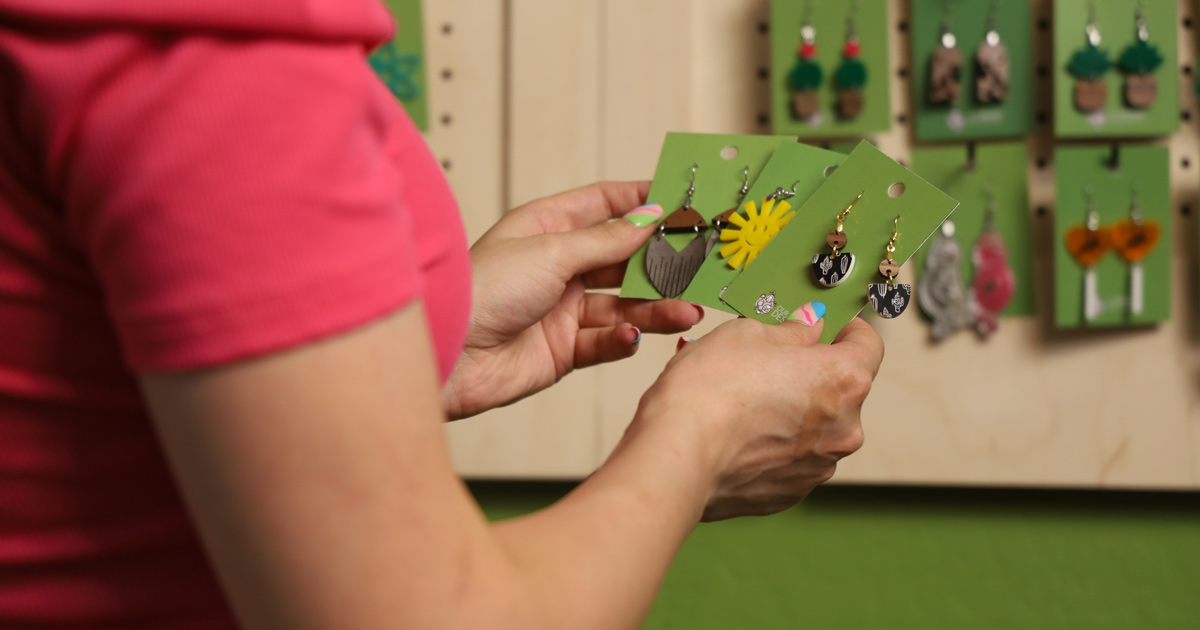
A clear example of that is our Modern Pride Flag Bottle Openers. That product exists because representation matters in everyday objects, not just in slogans. It’s functional. It’s celebratory. It’s normal.
My identity doesn’t limit what I create, but it absolutely informs it. It influences the spaces I show up in, the collaborations I pursue, and the details I choose to highlight in my work.
At the end of the day, I build things I would want to see in the world. And as a queer founder, that lens is always part of the design.
What do you wish more people understood about trans entrepreneurs and artists?
The hardest part of running a business while being visibly trans out in the world is the daily judgment.
I don’t mind the occasional misgendering or the confused looks. That kind of thing is visible. It’s awkward, but it’s surface-level. What’s harder is when someone clearly decides not to continue shopping or not to buy from us because they see I’m trans.
Confusion and blatant hatred look completely different. And it’s easier to tell than people might think.
But I also experience the opposite. I love when someone can tell I’m queer and goes out of their way to politely ask what pronouns I use. That small act of respect changes the entire interaction. It turns what could be tension into connection.
We’re not fragile. We’re not a statement. We’re just people trying to run our businesses and create meaningful work.
Supporting Our Family Designs
Visibility matters.
Not just in theory. In real rooms. In real markets. In real businesses built by real women.
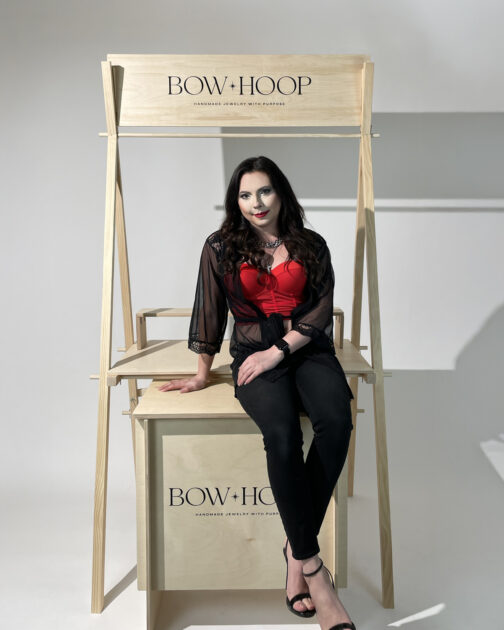
If you follow Our Family Designs, you’ve probably seen Casey and her team out at markets across Arizona, showing up week after week to build something tangible and rooted in community. One of my favorite things about watching her grow this brand is seeing that consistency. The early mornings. The booth setups. The conversations. The repetition that turns into momentum.
Shoutout to their Sundays at @merchantilemarket at the Scottsdale Civic Center all of March. If you’re local, go wander, shop small, and say hi.
As we honor International Transgender Day of Visibility this month, it feels especially meaningful to spotlight not just Casey’s identity but also her leadership, creativity, and the businesses she is building.
And this collaboration? It’s just the beginning.